
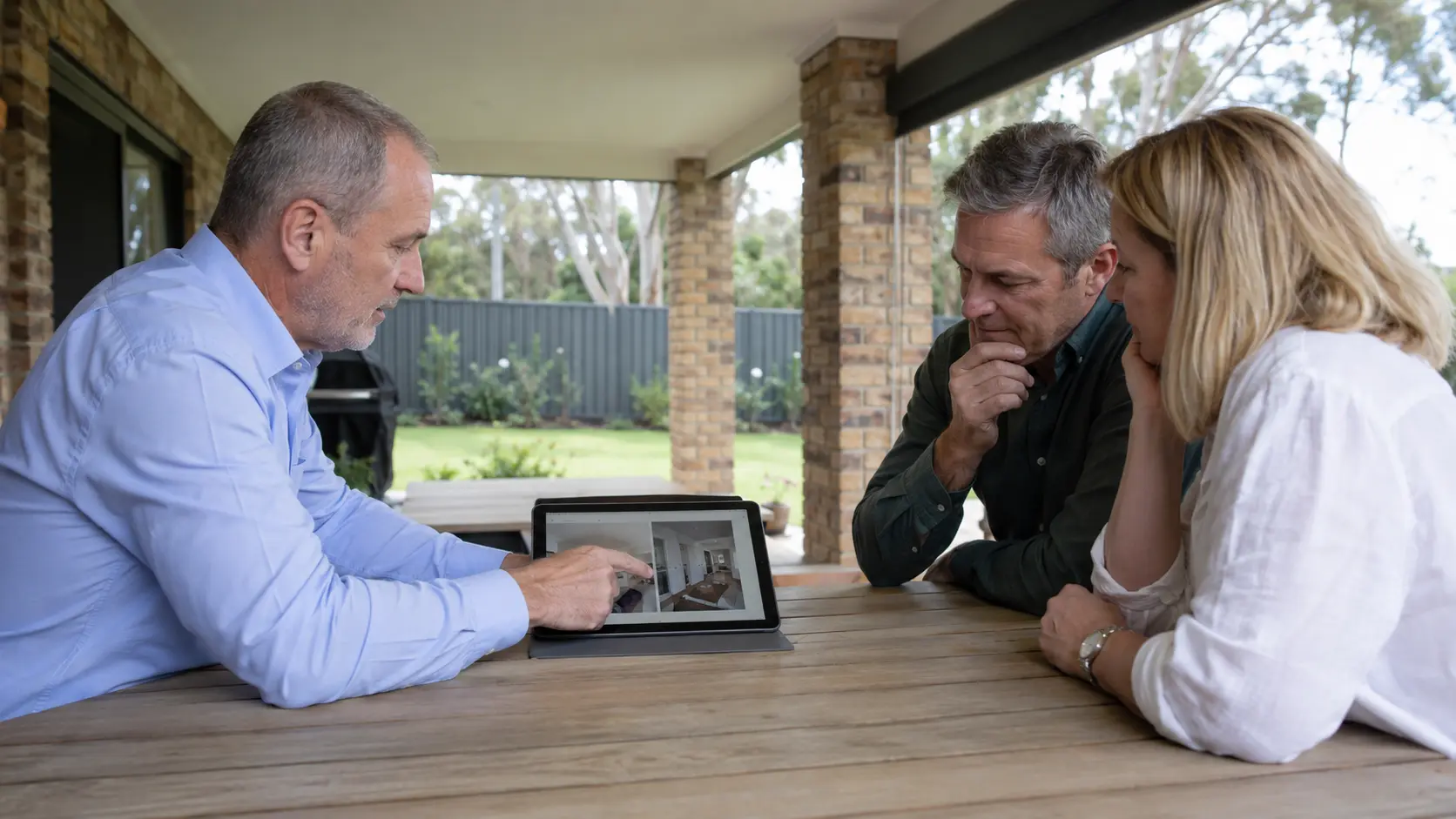
Working with Buyers Agents to Create Better Property Connections.
A practical guide for residential sales agents who want to build productive relationships with buyers agents, improve property matching and create smoother transactions while respecting each professional’s client.
Selling agents and buyers agents represent different sides of a property transaction.
The selling agent works for the property owner. The buyers agent represents the buyer and helps them search, assess and negotiate.
These different roles do not prevent the two professionals from building a strong working relationship. In fact, clear communication between them can help suitable buyers find suitable properties more efficiently.
A buyers agent may have several active clients with detailed requirements. A selling agent may be preparing new listings, speaking with future sellers and learning about properties that could come to market.
When both professionals understand how the other works, better property connections can develop.
Understand the Value of the Relationship.
A professional buyers agent may provide access to buyers who are:
Clear about what they want
Actively looking
Ready to purchase
Familiar with the buying process
Supported during research and due diligence
Able to provide useful feedback
Buying from interstate or overseas
Less likely to waste the seller’s time
The buyers agent also benefits from relationships with selling agents who provide accurate information, communicate clearly and understand their client’s requirements.
The goal is not special treatment. It is a more organised exchange of useful property and buyer information.
Respect Each Person’s Role.
Professional boundaries should be clear from the beginning.
The selling agent’s responsibilities are to the seller. This includes following the seller’s instructions, presenting offers properly and working towards the best outcome for the owner.
The buyers agent acts for the buyer. They may research properties, attend inspections, arrange due diligence, provide advice and negotiate according to the buyer’s instructions.
A selling agent should not attempt to move around the buyers agent and deal directly with their client unless the buyers agent and buyer have agreed.
Likewise, the buyers agent should understand that the selling agent cannot disclose confidential seller information or provide promises that have not been approved by the owner.
Respect for these roles creates trust.
Build a Useful Buyers Agent Contact List.
Do not treat buyers agents as one large group. Different businesses represent different clients, locations and property types.
Record details such as:
Areas covered
Typical buyer budgets
Preferred property types
Owner-occupier or investor focus
Interstate or international clients
Prestige or commercial specialities
Current buyer requirements
Preferred contact method
Previous inspections and transactions
Quality of communication
A simple CRM list allows you to contact relevant buyers agents instead of sending every listing to everyone.
Review the information regularly. Buyer requirements change quickly, and an old brief may no longer be active.
Ask for Clear Buyer Briefs.
A useful buyer brief helps a selling agent recognise a possible match.
It may include:
Preferred suburbs
Acceptable nearby locations
Property type
Price range
Minimum bedrooms and bathrooms
Land or building requirements
Essential features
Features the buyer can be flexible about
Intended use of the property
Preferred purchase timeframe
Finance position
Important contract conditions
The brief should not disclose private client details that are unnecessary for the property search.
Encourage buyers agents to explain which requirements are essential and which are preferences. A property may still be suitable even if it does not meet every item.
Share Relevant Properties Properly.
When a suitable property becomes available, send a clear summary rather than a vague message saying, “I may have something for your buyer.”
Include information such as:
Property location
Property type
Main features
Expected price range, where available
Inspection arrangements
Campaign timing
Contract availability
Known factors relevant to the brief
The next step if the buyer is interested
Be accurate. Do not change the description simply to make the property appear to match.
If the property is not yet publicly available, confirm that the owner has authorised the information to be shared. Explain what can be provided and whether confidentiality is expected.
“Off-market” should not be used as a label merely to create excitement around an ordinary future listing.
Make Inspections Easier.
Buyers agents may attend inspections for clients who live elsewhere or cannot attend personally.
Where suitable, help them understand:
Access arrangements
Inspection times
Property features
Known campaign dates
Document availability
How questions should be submitted
Whether a second inspection can be arranged
The seller’s preferred process for offers
Provide the same care you would expect when dealing with a buyer directly.
A buyers agent who receives clear information can give their client better guidance and may be able to make a decision more quickly.
Communicate Clearly During Due Diligence.
A serious buyer may need access to contracts, reports, body corporate information or other property documents.
The selling agent can support the process by:
Providing authorised documents promptly
Directing legal questions to the appropriate representatives
Confirming deadlines
Recording important communication
Answering factual property questions
Clarifying the offer process
Advising when further inspections may be possible
Keeping the seller informed
Do not guess when information is unknown. It is better to confirm a fact than to provide a quick but inaccurate answer.
Handle Offers Professionally.
The presence of a buyers agent does not change the need for a clear offer process.
When an offer is received:
Confirm the offer in writing
Check the proposed price and deposit
Record requested conditions
Confirm settlement timing
Clarify any included or excluded items
Present the offer according to the seller’s instructions
Communicate the response promptly
Keep an accurate record of negotiations
Avoid attempting to separate the buyer from their representative during negotiations.
If information is required directly from the buyer, explain why and include the buyers agent where appropriate.
Use Buyer Feedback Properly.
Buyers agents can provide valuable feedback because they often compare several properties for the same client.
Their feedback may help the seller understand:
How the property compares with alternatives
Which features buyers value
Concerns affecting interest
Whether the price position is being understood
What information buyers still require
Why a suitable buyer decided not to proceed
Do not assume that every comment is a negotiation tactic, but do not treat one opinion as the view of the entire market either.
Consider the feedback alongside inspection numbers, direct buyer comments, online activity and offers.
Create Value Outside Active Campaigns.
A professional relationship should not exist only when you have a listing to send.
You might stay connected by:
Asking for updated buyer briefs
Sharing useful local market information
Discussing buyer demand by property type
Providing information about upcoming listings
Inviting buyers agents to suitable inspections
Sharing educational content
Comparing observations about buyer behaviour
Referring a buyer who needs independent representation
Contact should remain useful and relevant. Sending every listing to every buyers agent will eventually train them to ignore your messages.
Create Reciprocal Property Opportunities.
A buyers agent’s client may need to sell an existing property before purchasing.
If the property is within your service area, the buyers agent may be able to introduce you. If it is outside your area, you may know a suitable agent.
Handle these introductions carefully.
Make it clear that you will:
Respect the buyers agent’s client relationship
Provide confidential early advice
Avoid pressuring the client
Keep the buyers agent informed where permission exists
Refer buying questions back to the buyers agent
Protect private client information
Reciprocal opportunities should develop because each professional trusts the other, not because referrals are being traded.
Common Relationship Mistakes.
Avoid:
Sending irrelevant listings
Failing to record active buyer briefs
Providing incomplete or inaccurate property information
Trying to deal around the buyers agent
Using “off-market” without a genuine basis
Sharing property details without the seller’s authority
Ignoring the buyers agent after an inspection
Treating every buyer as fully qualified without checking
Failing to communicate offer outcomes
Contacting the buyers agent only when a campaign is struggling
Sharing confidential client information
Promising access or outcomes you cannot guarantee
Buyers Agent Relationship Checklist.
Check that you have:
Understood the buyers agent’s service
Recorded their areas and buyer types
Requested clear and current buyer briefs
Identified essential and flexible requirements
Shared only relevant properties
Confirmed authority before sharing private listing information
Respected each professional’s client relationship
Provided accurate property details
Communicated clearly during inspections and negotiations
Recorded offers and feedback properly
Created useful reasons to remain in contact
Protected seller and buyer confidentiality
Selling agents and buyers agents do not need to approach every part of a transaction in the same way. They do need to communicate clearly, respect each other’s responsibilities and remain focused on their own client.
When that happens, suitable buyers can be connected with suitable properties more efficiently, and both clients receive a more professional experience.